
Slots by Sub-Genre in 2026: Mechanics, Maths and Certification
Slots are reel-based games of chance in which a random number generator picks symbol positions and a paytable turns those positions into a result. In this article, we at MCW Casino give a short introduction to the origin of the format, its sub-genres, its maths and the way we present these games in our lobby.
Beyond that shared engine, the category splits into families that differ in grid shape, win logic, feature design and the way the return spreads across rounds. We treat each family separately and then follow a typical title from the studio to our lobby.

The Origin of Slots
The best-known early machine was the Liberty Bell, built by Charles Fey in San Francisco in the late 1890s. It had three reels, five symbols and an automatic payout. Electromechanical machines followed in the 1960s, video reels arrived in the 1970s, and the first online slots appeared in the mid-1990s.
Each step kept the idea of spinning reels and a paytable while adding more ways to win. Today a random number generator decides every result, and the reels on screen only display that result.
Classic Three-Reel Games
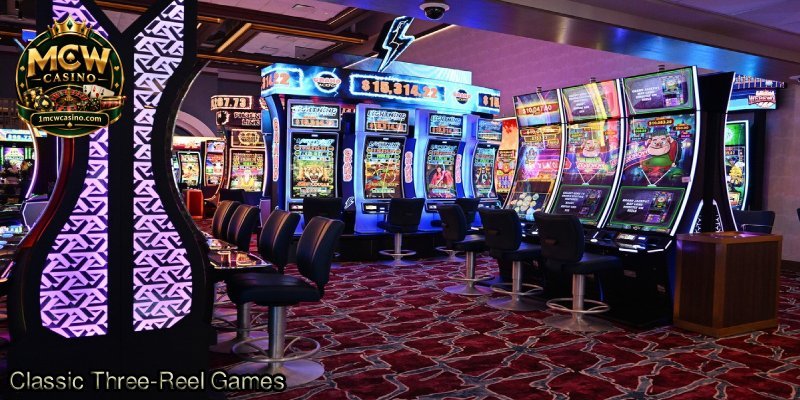
Classic slots copy the look of the old cabinet. It has three reels, usually three visible rows and between one and five fixed paylines. Symbols lean on fruit, bars, bells and sevens, and the paytable fits on one screen. Many modern versions add a wild that doubles any line it completes, but the structure stays sparse.
These games have few symbol combinations, so designers balance them through reel strip weighting. A top symbol may appear once on a virtual strip of dozens of stops, which keeps its prize rare. Return to player in this group often sits in the mid-nineties, and volatility tends to be low to medium.
Fixed Lines and Short Paytables
Fixed lines spread the stake over a set pattern that cannot be switched off. The total bet equals the line bet times the line count, and every line is evaluated independently. A win on the middle row and a win on a diagonal can land together and are added.
The short paytable makes these games transparent. Each symbol has one or two prize levels, and mixed-bar or any-seven combinations fill in smaller awards. Without bonus rounds, most of the return arrives through ordinary line wins.
Video Slots and the Five-Reel Standard
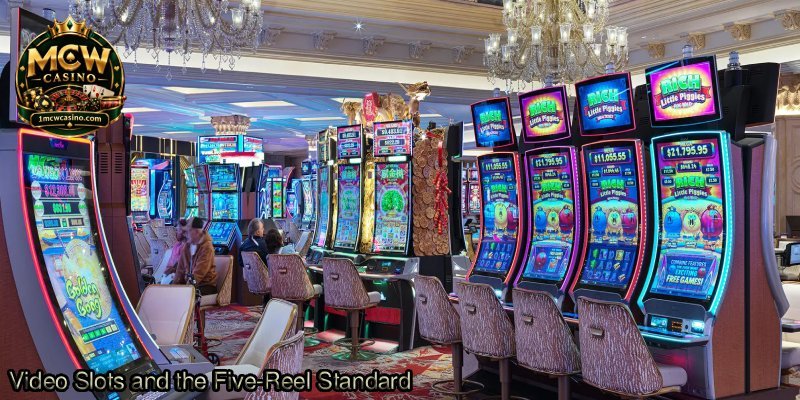
Video slots moved the game onto a screen and expanded the grid to five reels and three or four rows. Paylines grew to between ten and fifty, and later designs replaced lines with “ways” that pay matching symbols on adjacent reels from left to right. A five-by-three grid gives 243 ways, and a five-by-four grid gives 1,024.
These titles split the return into two pools. The base game pays frequent small and medium wins, while a feature round, usually triggered by scatters, carries a large share of the total return. Shifting more of the return into the feature raises volatility, because the value then arrives in rarer, larger bursts.
Free Spins and Retriggers
The free spins round is the signature feature of this group. Three or more scatters award a set number of rounds at the triggering stake, often with expanding wilds, sticky symbols or a growing multiplier. Extra scatters during the round may add more spins, which is known as a retrigger.
Retriggers create a long tail in the maths. Most feature rounds end at the first count, but a small share extend several times and produce outsized totals. Two games with the same return can therefore feel very different in play.
Megaways-Style Variable Reels
Variable-reel slots change the number of symbols on each reel from spin to spin. A typical six-reel layout shows between two and seven symbols per reel, so the ways count can reach 117,649 when every reel is at full height. Big Time Gaming patented the original mechanic and licensed it to other studios, and similar systems now exist under other names.
Volatility follows directly from the shifting ways count. Short reels offer few combinations, while tall reels open tens of thousands, so outcomes swing widely. Most titles in this group sit in the high-volatility bracket, and their feature rounds often add a multiplier that climbs with each cascade.
Ways Counts and Cascades
Ways are calculated by multiplying the symbol counts on each reel. Four symbols on all six reels gives 4,096 ways, and mixed heights produce any value in between. The live ways figure normally appears above the grid.
Cascades, also called tumbles or avalanches, remove winning symbols and drop new ones into the gaps. Each cascade pays as a new win at no extra stake, and chains continue until no fresh combination forms.
Cluster Pay Grids
Cluster slots drop lines and ways entirely. Symbols land on a larger grid, often six by six or seven by seven, and a prize is paid when a minimum group of identical symbols touches horizontally or vertically. Some designs pay on any position, counting a symbol anywhere on the screen.
The paytable is built around group size rather than position. A cluster of eight low icons may return a fraction of the stake, while fifteen premium icons can return many multiples. Hit frequency is usually lower on the base grid and higher during features.
Tumbling Symbols and Grid Multipliers
Almost every cluster title pairs its win logic with tumbling symbols, since a removed cluster leaves a hole to refill. Some grids mark the cells where wins occurred, so later wins on those cells are multiplied.
Position multipliers turn the grid into a memory of the round. In feature rounds the markers can persist across spins, which concentrates value in the free round and lifts volatility.
Hold-and-Win Designs
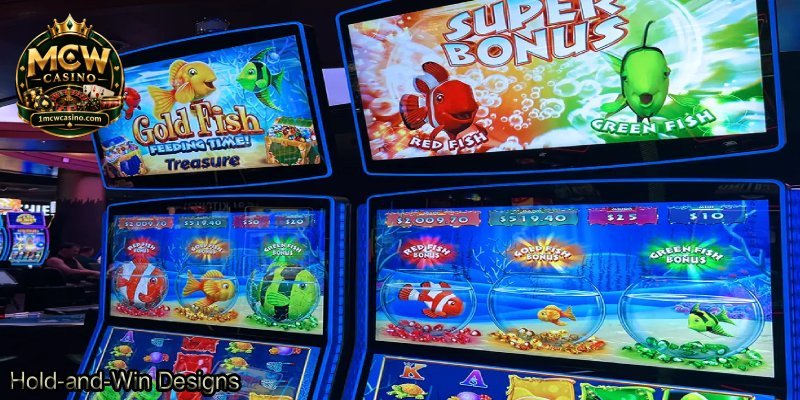
Hold-and-win slots centre on a respin feature. Coin or orb symbols, each showing a cash value or a jackpot label, trigger the feature when a set number land together, often six. Those symbols lock in place, the other positions spin again, and each new coin resets the respin counter, usually to three.
The round ends when the counter reaches zero or every position is filled. The locked values are then added and paid as one prize. Filling the whole grid often awards the top fixed jackpot, which explains the format’s popularity in Asian gaming halls and in online lobbies.
Coin Values and Fixed Prizes
Coin values come from a weighted table, usually expressed as multiples of the total bet. Low multiples are common and high ones rare, and labelled coins such as Mini, Minor and Major represent fixed multiples rather than shared pools.
Many of these games add collector symbols that sweep every visible value into one position, or upgrade symbols that double nearby coins. Volatility is usually medium to high, because the feature carries most of the return.
Jackpot Slots
Jackpot slots add a prize outside the ordinary paytable. Fixed jackpots are set multiples of the stake. Local progressives grow from a slice of every wager on one game at one operator, and network progressives collect contributions across many operators and can reach very large sums.
The contribution taken for a progressive pool reduces the base game return by the same amount. A game with a 96 per cent return might give one or two points of that figure to the jackpot, which leaves the regular paytable slightly leaner than a comparable title without one.
Pool Triggers and Seed Values
Some jackpots trigger on a symbol combination at maximum stake, some on a separate wheel or pick round, and some at random on any paid spin. In weighted random designs, higher stakes generally raise the trigger chance in proportion to the contribution.
Network pools are audited at provider level, and the current value is shown in real time. The seed value, the floor a pool resets to after a win, is set by the studio and listed in the help screen with the contribution rate.
Asian-Themed Mobile Slots
A large group of titles is designed first for phones and themed around Asian folklore, festivals, dragons, fortune symbols and mahjong tiles. JILI and PG Soft are well known in this space, and their games dominate many South and Southeast Asian lobbies. They load quickly, run on modest connections and keep each round short.
These mobile slots borrow freely from other families. Mahjong titles often combine ways pays with cascading tiles and a multiplier ladder, while fortune titles regularly use hold-and-win coins. The common thread is a design priority of clarity on a small screen and fast rounds.
Portrait Layouts and Short Rounds
Portrait orientation is common, with the reels in the upper part of the screen and the stake controls within thumb reach below. Symbols are large and high in contrast so they stay readable on budget handsets.
Short rounds raise the number of spins per minute. Some titles also include a turbo mode and a feature purchase option, which change the pace of play without altering the underlying probabilities.
How Slots Move From Studio to Lobby
Every title follows a similar path, from concept and art through mathematical modelling, software build, independent testing and certification to integration with the operator. The return, volatility rating and maximum win in the information panel all trace back to the modelling stage.
The game logic runs on the provider’s remote server, while we display the interface and handle the balance. No operator can alter reel strips or symbol weights once a version is certified, so the same title behaves the same way wherever it appears.
Modelling and Simulation
Game mathematicians design reel strips, symbol weights, trigger rates and prize tables to hit a target return and volatility. The model is then simulated over hundreds of millions of rounds to confirm the return and measure hit frequency.
Many studios release several return variants of the same game, for example 96, 94 and 92 per cent, by adjusting weights while keeping the visuals unchanged. The active figure appears in the game rules, which is why one title can show different numbers on different sites.
Laboratory Testing
Independent laboratories such as GLI, BMM, eCOGRA and iTech Labs test the random number generator for uniformity and unpredictability. They also verify the game maths against the submitted model, and each approved build receives a certificate tied to its version.
After release, periodic audits and live return monitoring continue. Any change to maths or core logic requires resubmission, which keeps the certified and live versions aligned.
Slots at MCW Casino
Our reel lobby at MCW Casino gathers titles from several licensed studios and groups them by provider, popularity and feature type. Classic, video, variable-reel, cluster, hold-and-win, jackpot and mobile-first games all appear, with search and filters for a specific mechanic or studio. Most titles offer a demo mode that runs the same certified maths with virtual credits.
Stakes are set in taka, and each game defines its minimum and maximum bet in the information panel. Free spin awards and tournaments carry their own terms on the Promotions page. Real-money play is open only to adults aged 18 and over where local law permits, and deposit caps, session reminders and self-exclusion sit in the account settings.
Summary
The format divides into clear families. Classic reels stay compact, video games rely on free spins, variable reels shift their ways count, cluster grids pay on groups, hold-and-win rounds collect coins, jackpot titles pool prizes, and mobile-first games suit small screens.
Behind every family sits the same path of modelling, simulation, testing and certified release. At MCW Casino we present the full range of slots in one lobby, with published return figures and rules attached to each title.